Vancouver winter preparation
Why you should detail your car before winter
Vancouver winter is mostly wet, but rain, road film, leaves, muddy shoes and occasional salt or brine still make fall an important time to clean and protect your vehicle.
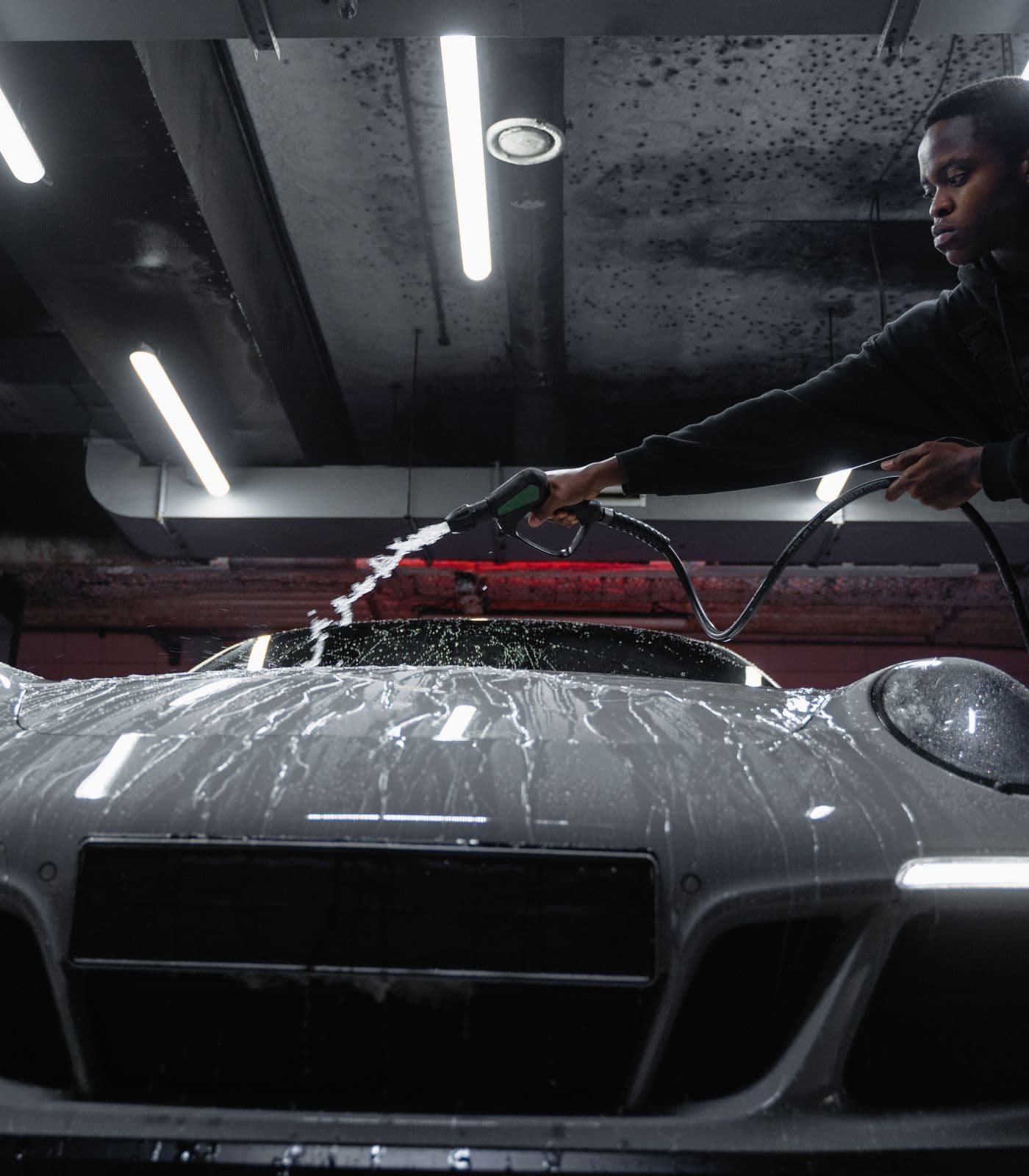
Vancouver roads can still be treated in winter
Vancouver is milder than many Canadian cities, but freezing periods do happen. The City uses brine and salt on priority routes as conditions require. Even when roads are not treated, wet pavement throws a mixture of water, grit and traffic film onto lower body panels and wheels.
That does not mean a fall detail makes a vehicle winter-proof. It creates a clean baseline and makes routine winter washing easier.
1. Remove contamination before applying protection
Wax or sealant should go onto properly cleaned paint. Applying protection over road film, insect residue or bonded contamination does not address what is already there. A pre-winter exterior service may involve washing, wheel cleaning, bug and tar attention, paint decontamination and then an appropriate protection product.
Our Full and Signature Detail packages combine interior work with exterior cleaning; Signature adds clay-bar decontamination and premium paint sealant.
2. Make winter maintenance easier
A protected, regularly washed exterior is generally easier to maintain than a neglected one. Protection is not a force field—it will not prevent chips, scratches or all staining—but it can help reduce how strongly ordinary contamination clings and improve water behaviour for a period of time.
Product durability varies with preparation, weather, parking and washing habits. Ask what product is being applied rather than relying on broad terms like “ceramic.”
3. Clean out leaves and organic debris
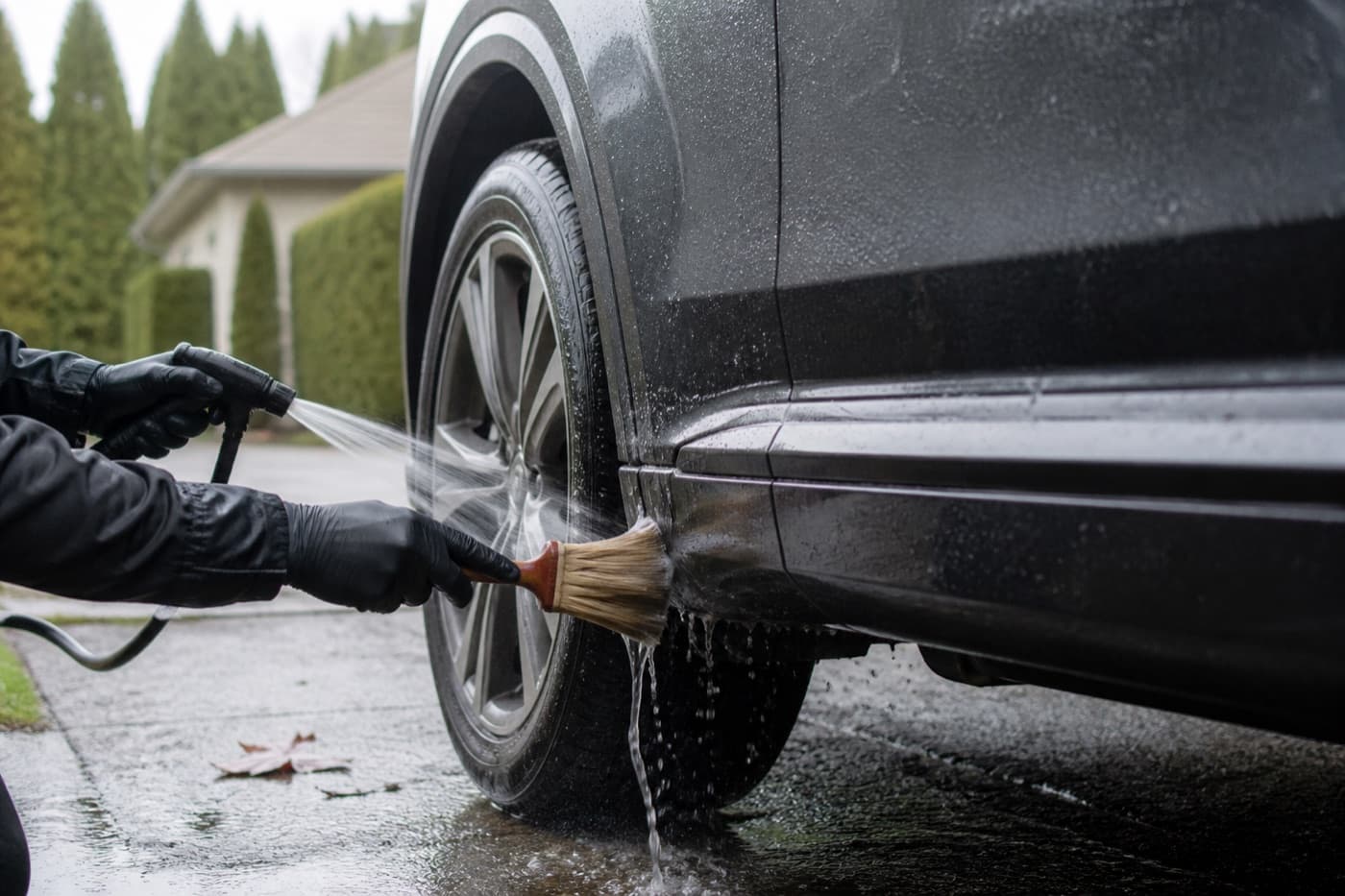
Fallen leaves and needles collect around windshield edges, cowl areas, trunk openings and door jambs. When organic debris stays wet, it holds moisture and can obstruct drainage paths. Remove reachable debris carefully and keep manufacturer drain areas clear; if you suspect a blocked sunroof or body drain, use an appropriate automotive service provider rather than forcing tools into it.
4. Reset the interior before months of wet shoes
Rain changes what enters the cabin: moisture, mud, grit and leaf fragments collect on mats and carpets. Starting winter with a clean, dry interior makes new mess easier to spot and maintain.
- Vacuum carpets, seat rails and cargo areas.
- Clean and fully dry floor mats before reinstalling them.
- Treat existing stains before repeatedly adding moisture.
- Keep cloths available for fogged or wet interior glass.
- Remove food and debris that can contribute to odours.
If the cabin needs the most attention, our package comparison guide explains when an interior-only service is enough.
5. Improve visibility with properly cleaned glass
Clean glass does not replace safe driving or working wipers, but removing interior film and exterior residue can reduce distracting smears and glare. Before winter, also inspect wiper blades, washer fluid and exterior lighting. Those are basic safety-maintenance checks rather than detailing services, but they belong on the same seasonal checklist.
6. Keep washing through winter
A pre-winter detail is a starting point, not a one-time substitute for maintenance. During winter, wash the vehicle when conditions allow, with attention to wheels and lower panels. Avoid washing when water will immediately freeze, follow any strata or site rules, and use methods that minimize scratching.
Mobile appointments also depend on safe access and workable weather. Read our Vancouver mobile-detailing guide before booking at a home, office or condo.
When should you book?
Early to mid-fall is a practical window: summer debris can be removed before sustained wet weather and the first freezing periods. The best timing still depends on the vehicle. If the paint is contaminated, the carpets are already stained or leaves are collecting around openings, the condition—not the calendar—is the reason to act.